
A United States military strike in the southern Iranian coastal town of Kuhestak struck a residential area during a wedding gathering in early September 2026, according to Iranian officials, local residents and subsequent reporting. The incident killed at least five people and injured more than 50 others, prompting an investigation by US authorities amid the broader conflict between the two countries.
The Incident in Kuhestak
Kuhestak, a fishing port in Sirik County within Hormozgan province near the Strait of Hormuz, came under attack during a period of intensified US strikes on targets described as military and communications infrastructure. Iranian state media and local accounts reported that one of the munitions hit a family home where a wedding celebration was under way.
The gathering involved relatives and guests of the bride, identified in reports as Maryam Mallahi, daughter of a local fisherman. Celebrations were taking place in the courtyard and indoor spaces of the residential compound when the explosion occurred in the evening. A nearby telecommunications tower was also struck around the same time.
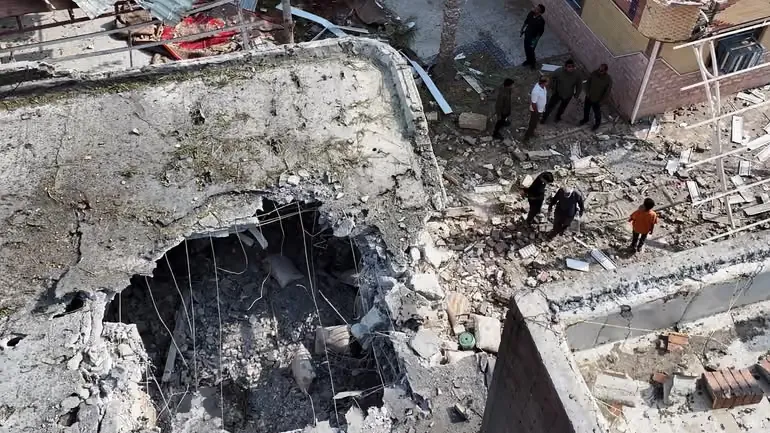
Iranian officials and the Red Crescent reported that the blast caused the roof of the building to collapse. Debris filled the reception area. Among the items visible in verified images from the scene were personal belongings, including shoes left scattered amid the wreckage.
Casualties and Local Accounts
Official Iranian figures and monitoring groups initially reported four deaths, later updated to five after one injured person succumbed to wounds in hospital. The dead included two women in their forties and fifties and two boys, one aged four and another sixteen. More than sixty people were wounded, many of them women and children who had been attending the celebration.
Residents described sudden chaos. One neighbour recounted hearing music from the wedding before a powerful blast shook the area, followed by screams. Others spoke of people trapped under rubble and the difficulty of reaching the injured in the immediate aftermath. The father of the bride, Ali Mallahi, stated that those present were civilians and expressed relief that the number of fatalities had not been higher.
Funeral gatherings drew large numbers of local residents in the days that followed.
US Response and Investigation
US officials stated that American forces do not target civilians. Vice President JD Vance confirmed that the reports were being examined, noting that the administration takes such claims seriously while expressing scepticism toward some Iranian state media accounts. A spokesperson for US Central Command said the military was aware of the Iranian reports and was looking into them.
Weapons analysts who reviewed verified photographs and video of the damage concluded that the pattern was consistent with a direct hit by a munition rather than secondary effects from a nearby explosion. Several assessed that the weapon was likely of US origin. One possibility raised by officials is that a strike intended for the telecommunications site or another military-linked target went astray.
The United States has not accepted formal responsibility for striking the wedding site itself. The investigation remains ongoing.
Context of the Wider Conflict
The incident occurred against the backdrop of sustained hostilities between the United States and Iran, including exchanges of strikes focused on military assets, air defences, radar systems and maritime-related facilities in the region. Kuhestak’s location near the strategically sensitive Strait of Hormuz placed it within an area of repeated military activity.
Civilian harm in such environments has been a recurring concern on both sides of the conflict. Previous incidents involving schools and residential areas have drawn international attention and calls for greater precautions.
Independent Verification and Differing Narratives
Western news organisations independently examined imagery and video from Kuhestak. Analysis supported the presence of significant structural damage to the residential building and the nearby tower. Iranian authorities characterised the strike on the wedding as a deliberate attack on civilians and described it as a violation of international norms. US statements have emphasised that civilian casualties, when they occur, are unintended and subject to review.
The precise sequence—whether the munition was aimed at the communications tower and landed short, or whether another factor was involved—has not been conclusively established in public reporting. The presence of a large civilian gathering at the time of the strike is not disputed by the available accounts.
Humanitarian and Political Implications
The deaths of women and children at a family celebration have intensified local grief and fuelled broader political reactions inside Iran. International observers have noted the difficulty of conducting precise military operations in densely inhabited coastal areas where military and civilian infrastructure can lie in close proximity.
For the families involved, the event transformed a moment of communal joy into sudden loss. Medical facilities in the region treated dozens of wounded, some with serious injuries requiring extended care.
Continuing Scrutiny
As the US investigation proceeds, further details may emerge regarding the targeting process, the type of munition used and any procedural reviews that follow. Iranian authorities continue to highlight the civilian toll. Independent monitoring groups have documented the names of the deceased and the scale of injuries.
The Kuhestak wedding strike stands as one of the more vivid illustrations of how rapidly military action can intersect with ordinary civilian life in a conflict zone. The final accounting of responsibility and the measures taken to reduce similar risks will shape both the immediate diplomatic response and longer-term assessments of the conduct of operations in the region.
Read more – atechsslaash.com , BestMenuHub.com
