
Nine days after catastrophic flash floods tore through northern Nepal, rescuers pulled two workers alive from a tunnel at the Trishuli 3A Hydropower Project. The successful extraction on September 4 followed reports of human voices heard from inside the debris-choked passage, offering a rare moment of hope amid one of the deadliest disasters to strike the Himalayan nation in recent years.
The Breakthrough at Trishuli 3A
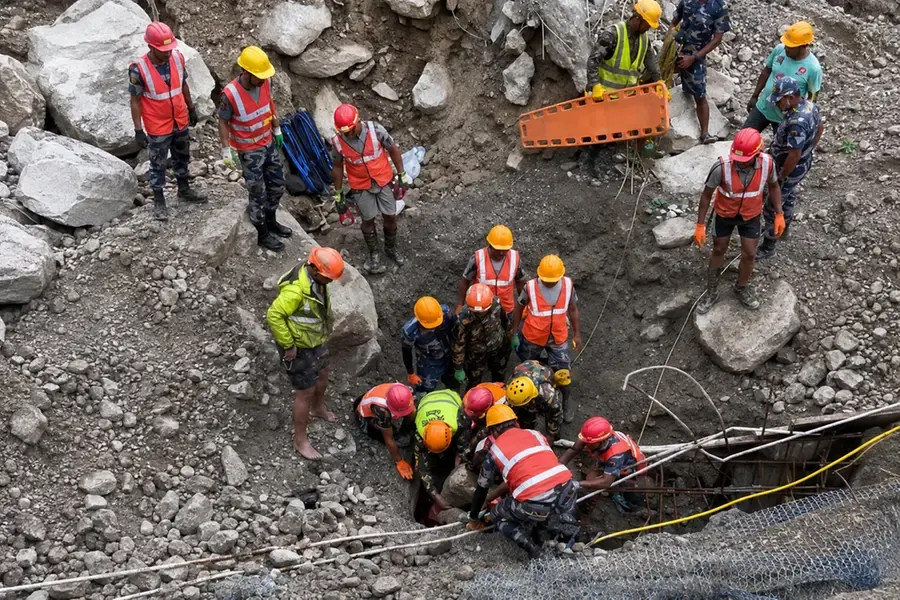
Joint teams from the Nepali Army and Armed Police Force located and rescued the two men from the tunnel in Rasuwa district. The operation intensified after engineers and officials confirmed that voices were audible from within the structure. Lawmakers and personnel on site reported that more than one voice had been heard, prompting renewed urgency in the search.
The men were brought out and later transferred toward Kathmandu for medical care. Details of their physical condition remained limited in the immediate aftermath, but their survival after more than a week underground marked a significant development in the prolonged rescue effort. Search teams continued working at the site, encouraged by the possibility that additional survivors might still be reachable.
Context of the August 26 Disaster
The floods struck on August 26 when a massive surge of water, mud, rock and debris raced down the Bhotekoshi and Trishuli river systems near the Nepal-Tibet border. Scientists have linked the event to an ice-rock avalanche or glacial collapse in the high mountains. The sudden wall of material destroyed settlements, roads, bridges and several hydropower installations under construction or operation along the river corridor.
Rasuwa and neighbouring districts suffered particularly severe damage. Hydropower projects, which rely on long tunnels bored into the mountainsides to channel river water, became death traps for many workers. Hundreds were inside tunnels or related underground facilities when the flood arrived with little warning. Some managed to climb to higher ground or escape in the early hours; many others were swept away or sealed inside by collapsing debris and thick layers of mud and silt.
Scale of the Human Cost
By early September the confirmed death toll in Nepal had climbed past 1,250, with Chinese authorities reporting additional fatalities on their side of the border. The number of people still missing or unaccounted for stood in the thousands. A large share of the missing included workers from multiple hydropower sites. Earlier phases of the operation had already brought out hundreds of people from various tunnels, including foreign nationals, yet many others remained untraced.
The Trishuli 3A site was one of several focus points for specialised rescue teams. International assistance from India, China and other partners provided equipment, technical expertise and personnel to support Nepali forces. Heavy machinery was airlifted into remote locations, and teams worked around the clock to clear entrances blocked by boulders, collapsed structures and deep mud.
Challenges Facing Rescuers
Accessing the tunnels proved extremely difficult. Entrances were buried under tens of metres of debris in places. Rescuers had to dig, blast and carefully excavate while managing the risk of further collapses or secondary flooding. Weather conditions and the unstable mountain terrain added to the hazards. In some locations teams pumped air into sealed sections and attempted to establish contact before physical entry became possible.
The confirmation of voices at Trishuli 3A after nine days demonstrated that pockets of survivable space could exist inside the complex underground systems. Some hydropower tunnels contain chambers or areas that may retain air and remain relatively dry even when outer sections are inundated. The successful rescue validated the decision to persist with painstaking clearance work rather than abandoning sites after the first critical days.
Ongoing Operations and Broader Impact
Search and rescue efforts continued across the affected districts even as the focus gradually expanded to include recovery of bodies, provision of relief supplies and assessment of long-term reconstruction needs. Thousands of security personnel remained deployed. Families of the missing waited anxiously for news, while communities that lost homes and livelihoods began the difficult process of rebuilding.
The disaster has drawn attention to the vulnerability of Himalayan infrastructure and settlements to sudden glacial and landslide-triggered floods. Hydropower development, a cornerstone of Nepal’s energy strategy, involves extensive tunnelling in geologically active and climate-sensitive terrain. The scale of worker casualties has prompted discussion about safety protocols, early-warning systems and emergency preparedness at such sites.
A Narrow Window of Hope
The extraction of two living workers more than a week after the floods underscores both the resilience of those trapped and the determination of the rescue teams. It also illustrates how quickly conditions can change once contact is established. Hearing voices transformed the operation from a grim clearance task into an active life-saving mission.
As teams press deeper into remaining sections of the Trishuli 3A tunnel and other affected projects, the possibility of further survivors remains the driving force. Each day that passes reduces the odds, yet the September 4 rescue has shown that survival is still possible. For a country mourning more than a thousand confirmed dead and searching for thousands more, the return of even two lives carries profound significance.
The coming days will determine whether additional voices emerge from the darkness and whether more workers can be brought to safety. In the meantime, the successful operation at Trishuli 3A stands as a testament to persistent effort under extraordinarily difficult conditions.
Read more – Blessingread.com , pfptrends.com
