
A research proposal is one of the most important academic documents for students and researchers. Whether you are applying for admission to a postgraduate programme, seeking approval for a thesis, applying for research funding, or planning an independent research project, a well-written research proposal serves as the foundation of your study. It explains what you plan to research, why the topic is important, how you intend to conduct the study, and what outcomes you expect to achieve.
Universities, research institutions, and funding organisations use research proposals to evaluate the quality, originality, feasibility, and significance of a proposed study. A clear and structured proposal demonstrates that the researcher has a solid understanding of the subject and a practical plan for completing the research successfully.
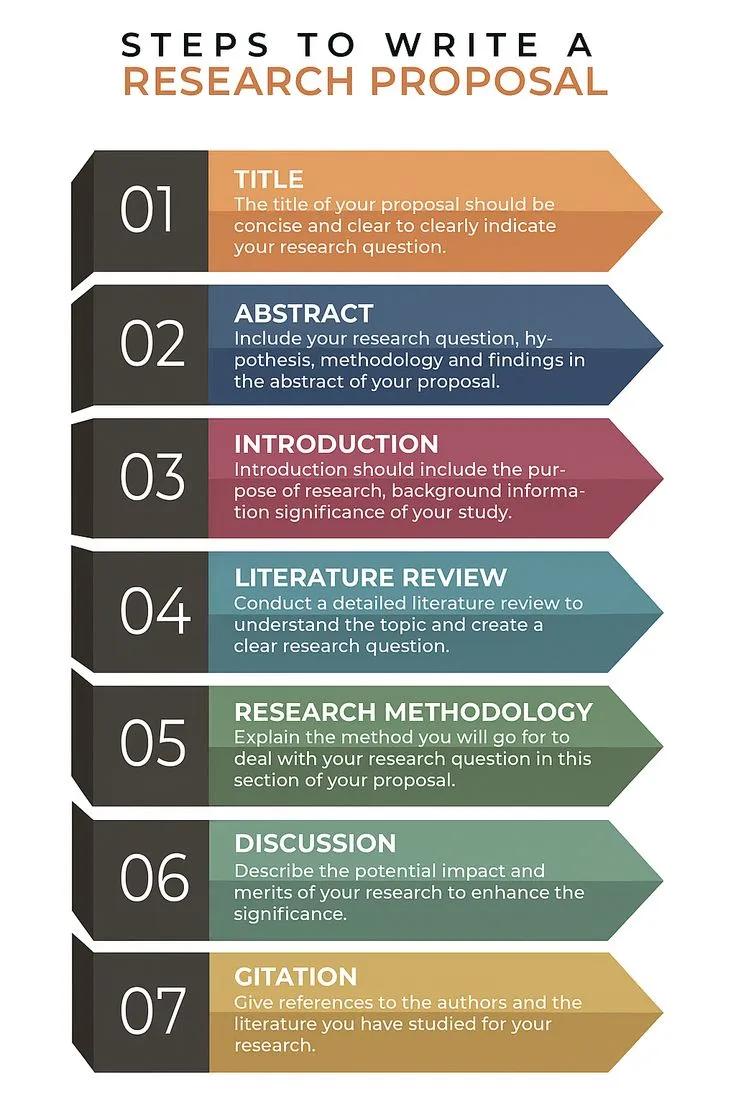
This comprehensive guide explains the standard research proposal format, the purpose of each section, and practical tips to help students and researchers prepare an effective proposal.
What Is a Research Proposal?
A research proposal is a formal academic document that outlines a planned research project before the actual study begins. It describes the research problem, objectives, methodology, expected outcomes, and the significance of the study.
Unlike a research paper, which presents completed findings, a research proposal focuses on what the researcher intends to investigate and how the research will be carried out.
The proposal allows supervisors, review committees, and funding agencies to assess whether the proposed research is worthwhile, achievable, and methodologically sound.
Why Is a Research Proposal Important?
A research proposal plays a crucial role in academic research because it acts as a roadmap for the entire project. It helps researchers organise their ideas, identify knowledge gaps, define research questions, and establish a structured approach before collecting data.
For universities, the proposal demonstrates the student’s understanding of the topic and readiness to undertake the research. For funding organisations, it provides evidence that the proposed study has practical value and clear objectives.
A carefully prepared proposal also reduces confusion during later stages of research by providing a detailed plan that guides data collection, analysis, and reporting.
Choosing the Right Research Topic
The first step in writing a research proposal is selecting an appropriate research topic.
A strong research topic should be relevant, specific, original, and manageable within the available time and resources. Researchers should choose a subject that genuinely interests them while ensuring that sufficient academic literature exists to support the study.
Before finalising a topic, it is advisable to review recent journal articles, conference papers, books, and existing studies to identify unanswered questions or research gaps.
Selecting a focused topic makes it easier to define clear objectives and develop an effective research design.
Writing an Effective Title
The title is the first element readers notice. It should clearly communicate the main focus of the proposed study without being unnecessarily lengthy.
A good research title usually identifies the key variables, population, subject area, or research context.
Avoid vague or overly broad titles. Instead, use precise language that accurately reflects the proposed investigation.
Introduction to the Research
The introduction explains the background of the research problem and provides context for the study.
This section introduces the topic, explains its importance, and describes the broader issue that motivated the research.
The introduction should gradually narrow the discussion from the general subject to the specific research problem that the study intends to address.
A well-written introduction captures the reader’s attention while establishing the significance of the research.
Statement of the Research Problem
The research problem is the central issue that the study seeks to investigate.
This section explains the existing challenge, limitation, or unanswered question within the chosen field.
Researchers should clearly identify what is currently unknown, insufficiently understood, or controversial.
A clearly defined research problem helps justify the need for the study and guides the development of research objectives.
Research Objectives
Research objectives describe the specific goals that the study aims to achieve.
Objectives should be clear, measurable, realistic, and directly connected to the research problem.
Well-defined objectives help maintain focus throughout the research process and provide a framework for data collection and analysis.
Generally, proposals include one primary objective supported by several specific objectives.
Research Questions
Research questions guide the investigation by identifying exactly what the researcher wants to answer.
These questions should align closely with the research objectives and remain focused on the central research problem.
Strong research questions are clear, specific, and capable of being answered through systematic investigation.
They provide direction for selecting appropriate research methods and analytical techniques.
Literature Review
The literature review examines previous research related to the chosen topic.
This section summarises important theories, concepts, findings, and existing studies while identifying gaps that justify the proposed research.
Rather than simply listing previous studies, researchers should critically analyse existing knowledge and explain how their proposed research will contribute to the field.
Using recent, credible, and peer-reviewed academic sources strengthens the quality of the literature review.
Research Methodology
The methodology section explains how the research will be conducted.
This is one of the most important parts of a research proposal because it demonstrates the practical feasibility of the study.
Researchers should clearly explain whether the study will use qualitative methods, quantitative methods, or a mixed-methods approach.
The methodology should describe the research design, target population, sampling technique, sample size, data collection methods, research instruments, and analytical procedures.
A transparent methodology increases confidence that the research can produce reliable and valid results.
Data Collection Methods
Researchers should explain how information will be gathered during the study.
Depending on the research topic, data may be collected through surveys, interviews, questionnaires, observations, experiments, focus groups, or secondary sources.
The proposal should justify why the selected data collection method is appropriate for answering the research questions.
Clear planning improves the efficiency and credibility of the research process.
Data Analysis Plan
The proposal should explain how collected data will be analysed.
Quantitative studies may involve statistical analysis using appropriate software, while qualitative research may apply thematic analysis, content analysis, or narrative interpretation.
The analysis plan should correspond with the research questions and chosen methodology.
This section assures reviewers that the researcher has considered how meaningful conclusions will be drawn from the collected data.
Ethical Considerations
Research involving human participants must follow ethical standards.
Researchers should explain how informed consent will be obtained, participant confidentiality protected, and personal information handled responsibly.
The proposal should also mention any institutional ethical approval required before beginning the study.
Ethical research practices improve credibility and protect participant rights.
Scope and Limitations
Every research study has practical limitations.
Researchers should honestly describe factors such as limited time, financial resources, geographic boundaries, sample size, or data availability that may influence the study.
Acknowledging limitations demonstrates transparency and realistic planning rather than weakness.
Clearly defining the scope also helps readers understand what the study will and will not cover.
Expected Outcomes
The expected outcomes section explains what the researcher hopes to achieve through the study.
These outcomes may include theoretical contributions, practical recommendations, policy implications, or improved understanding of the research topic.
Although final findings cannot be predicted with certainty, researchers can explain the anticipated value and potential impact of the study.
Research Timeline
Including a timeline demonstrates effective project planning.
Researchers should divide the project into stages such as literature review, proposal approval, data collection, data analysis, report writing, and final submission.
A realistic timeline reassures supervisors and funding agencies that the project can be completed within the proposed schedule.
References
The proposal should conclude with a properly formatted reference list containing all sources cited throughout the document.
Most universities require recognised citation styles such as APA, MLA, Chicago, Harvard, or IEEE.
Researchers should carefully follow their institution’s prescribed referencing guidelines to maintain academic integrity and avoid plagiarism.
Common Mistakes to Avoid
Many research proposals are weakened by unclear objectives, poorly defined research problems, weak literature reviews, inconsistent methodologies, or insufficient justification for the study.
Researchers should also avoid overly broad topics, unsupported claims, grammatical errors, and inaccurate referencing.
Careful proofreading and revision improve the overall quality of the proposal and increase the likelihood of approval.
Tips for Writing a Strong Research Proposal
An effective research proposal should be clear, logical, well-structured, and evidence-based. Researchers should begin planning early, review relevant academic literature thoroughly, and ensure that every section supports the central research problem.
Using simple academic language, maintaining consistency between objectives and methodology, and following institutional formatting guidelines can significantly strengthen the proposal.
Seeking feedback from supervisors or experienced researchers before submission can also help identify areas for improvement.
Conclusion
A research proposal is far more than a formal academic requirement—it is the blueprint for a successful research project. A well-prepared proposal demonstrates the researcher’s understanding of the topic, identifies a meaningful research problem, outlines an appropriate methodology, and explains the potential contribution of the study.
Whether preparing a university dissertation, postgraduate thesis, doctoral research, or funding application, following a structured research proposal format improves clarity, credibility, and organisation. By investing time in planning, reviewing existing literature, and presenting a logical research design, students and researchers can develop proposals that meet academic standards and lay the foundation for meaningful, high-quality research.
Read more – topstablegames.com
