
Research plays a vital role in expanding knowledge, solving problems, and supporting informed decision-making across fields such as education, healthcare, business, social sciences, and technology. However, collecting data is only one part of the research process. The real value of research lies in analyzing that data correctly to uncover meaningful insights and answer the research questions. Research data analysis is the systematic process of examining, organizing, interpreting, and presenting collected information in a way that helps researchers draw accurate conclusions.
A well-planned data analysis process ensures that research findings are reliable, valid, and useful. Whether a study involves numerical data from surveys or descriptive information gathered through interviews and observations, selecting the appropriate analysis technique is essential. This guide explains the major research data analysis techniques, their importance, applications, and best practices to help researchers understand how meaningful conclusions are developed from raw data.
What Is Research Data Analysis?
Research data analysis refers to the process of transforming raw information into meaningful findings that answer a research question or test a hypothesis. After data has been collected, researchers carefully organize and examine it to identify trends, patterns, relationships, or differences. This process allows researchers to move beyond simply gathering information and instead generate knowledge that can support academic studies, business strategies, healthcare improvements, or public policy decisions.
The analysis process involves several stages, including cleaning the data, selecting appropriate analytical methods, interpreting results, and presenting conclusions. Without proper analysis, even high-quality data may fail to provide valuable insights. Effective data analysis helps ensure that research findings are accurate, objective, and supported by evidence.
Why Is Research Data Analysis Important?
Research data analysis is one of the most critical stages of any research project because it converts raw information into actionable knowledge. Data collected through surveys, experiments, observations, or interviews has little value until it is carefully analyzed and interpreted. Analysis helps researchers identify meaningful patterns that may not be immediately visible in the raw dataset.
Proper analysis also improves the credibility of research by ensuring that conclusions are based on evidence rather than assumptions. It enables researchers to evaluate whether their hypotheses are supported by the data and provides confidence in the recommendations or decisions that follow. In academic research, sound data analysis strengthens the validity of the study, while in business and healthcare it supports informed decision-making and future planning.
Types of Research Data
Before selecting an analysis technique, researchers must first understand the type of data they have collected. Research data generally falls into two major categories: quantitative data and qualitative data. Each type requires different methods of analysis and serves different research purposes.
Quantitative Data
Quantitative data consists of numerical values that can be measured, counted, or calculated. This type of data is objective and is commonly collected through structured surveys, experiments, questionnaires, financial records, and standardized tests. Examples include age, income, examination scores, sales revenue, population figures, and production output.
Because quantitative data is numerical, researchers can use statistical techniques to summarize the information, identify relationships, and test research hypotheses. Quantitative analysis is especially useful when researchers need measurable results or want to compare different groups using statistical evidence.
Qualitative Data
Qualitative data focuses on descriptions, opinions, experiences, attitudes, and behaviors rather than numbers. This type of data is usually collected through interviews, focus group discussions, observations, case studies, and open-ended survey questions. Instead of measuring quantities, qualitative research seeks to understand why people think or behave in certain ways.
Analyzing qualitative data involves identifying themes, concepts, and recurring ideas within the collected information. Researchers carefully review responses to gain deeper insights into human experiences, social interactions, and organizational behavior. This approach is particularly valuable when exploring complex issues that cannot easily be measured using numbers alone.
Quantitative Data Analysis Techniques
Quantitative research relies on statistical methods to summarize and interpret numerical information. Different techniques are used depending on the research objectives and the nature of the collected data.
Descriptive Statistics
Descriptive statistics provide a summary of the main characteristics of a dataset. Rather than making predictions, descriptive analysis helps researchers understand the overall structure of their data. Measures such as the mean, median, mode, range, and standard deviation describe how data is distributed and whether there are significant variations among observations.
For example, a researcher studying students’ examination scores may calculate the average score to understand overall academic performance. Descriptive statistics are often the first step in quantitative analysis because they provide a clear overview of the collected information before more advanced statistical methods are applied.
Inferential Statistics
Inferential statistics enable researchers to make conclusions about a larger population using information collected from a smaller sample. Since it is often impossible to study every individual in a population, researchers analyze sample data and use statistical techniques to estimate population characteristics.
Methods such as hypothesis testing, confidence intervals, t-tests, chi-square tests, and analysis of variance help determine whether observed differences or relationships are statistically significant. Inferential statistics are widely used in scientific research because they allow researchers to generalize findings beyond the individuals who participated in the study.
Correlation Analysis
Correlation analysis examines the relationship between two variables and determines whether changes in one variable are associated with changes in another. A positive correlation indicates that both variables increase together, while a negative correlation suggests that as one variable increases, the other decreases.
For instance, researchers may investigate whether increased study time is associated with higher examination scores or whether exercise frequency is related to improved physical health. It is important to remember that correlation only identifies relationships and does not prove that one variable causes changes in another.
Regression Analysis
Regression analysis is an advanced statistical technique used to predict how one variable influences another. Researchers often use regression models to estimate future outcomes, identify important predictors, and understand the strength of relationships between variables.
Businesses frequently apply regression analysis to forecast sales, economists use it to predict market trends, and healthcare researchers employ it to study factors affecting disease outcomes. Regression analysis supports evidence-based decision-making by providing measurable estimates of relationships within the data.
Qualitative Data Analysis Techniques
Qualitative analysis focuses on understanding meanings, experiences, and perspectives rather than numerical measurements. Researchers carefully examine textual or observational data to identify important themes and interpretations.
Thematic Analysis
Thematic analysis is one of the most widely used qualitative research methods. Researchers read interview transcripts, observation notes, or written responses multiple times to identify recurring ideas or patterns. Similar responses are grouped into themes that represent important aspects of the research topic.
For example, researchers studying employee satisfaction may identify themes such as workplace culture, leadership quality, career development, and work-life balance. These themes provide valuable insights into participants’ experiences and help explain complex social or organizational issues.
Content Analysis
Content analysis involves systematically examining written, visual, or audio materials to identify recurring concepts, words, or topics. Researchers categorize information into meaningful groups and analyze how frequently certain ideas appear.
This technique is commonly used in media studies, marketing research, communication studies, and social media analysis. Content analysis enables researchers to examine large amounts of information while maintaining consistency and objectivity throughout the research process.
Narrative Analysis
Narrative analysis focuses on understanding people’s personal stories and life experiences. Rather than simply identifying themes, researchers examine how individuals describe events, organize their stories, and assign meaning to their experiences.
This approach is particularly useful in psychology, education, sociology, and healthcare, where understanding individual experiences provides valuable insights into human behavior and decision-making.
Grounded Theory
Grounded theory is used when researchers aim to develop new theories directly from collected data rather than testing existing theories. Researchers continuously compare data, identify emerging concepts, and refine categories until a comprehensive explanation is developed.
Grounded theory is especially valuable when studying new or underexplored topics where existing theories may not adequately explain the observed phenomena.
Mixed Methods Research
Mixed methods research combines both quantitative and qualitative analysis within a single study. By integrating numerical evidence with detailed personal experiences, researchers gain a more complete understanding of the research problem.
For example, a customer satisfaction study may include numerical survey ratings alongside interviews that explore customer opinions in greater depth. The combination of both approaches improves research quality by providing multiple perspectives and increasing confidence in the findings.
Steps in Research Data Analysis
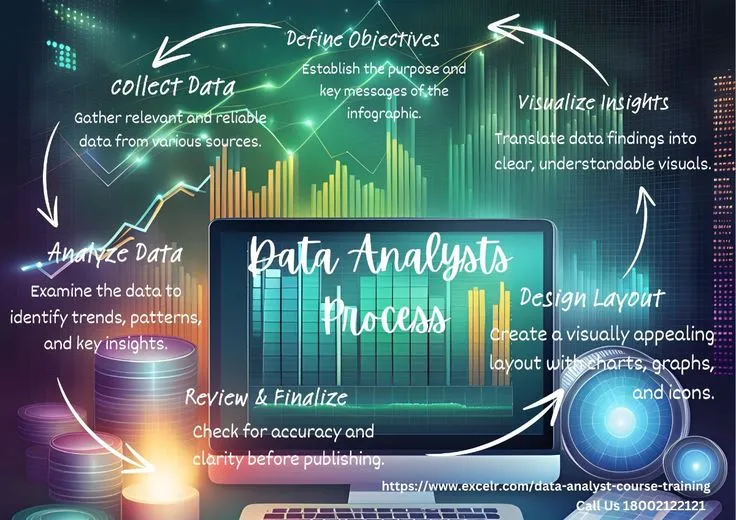
Research data analysis follows a structured sequence of activities. Researchers begin by clearly defining the research objectives and identifying the questions they wish to answer. Once data has been collected, it is carefully reviewed to identify errors, remove duplicate entries, and address missing information.
After preparing the dataset, researchers select the most appropriate analytical techniques based on the research design and data type. The selected methods are then applied to analyze the information and identify meaningful patterns or relationships. Finally, researchers interpret the findings, discuss their significance, acknowledge any limitations, and present the results using clear explanations, tables, and visual representations where appropriate.
Software Used for Research Data Analysis
Modern research relies heavily on specialized software to improve the efficiency and accuracy of data analysis. Programs such as Microsoft Excel, SPSS, R, Python, SAS, and Stata are widely used for quantitative analysis because they offer powerful statistical capabilities and data visualization tools.
For qualitative research, software such as NVivo, MAXQDA, and ATLAS.ti helps researchers organize interview transcripts, code textual information, identify themes, and manage large collections of qualitative data. Although software simplifies the analytical process, researchers must still apply sound methodological principles and interpret results carefully.
Best Practices for Effective Research Data Analysis
Producing reliable research findings requires careful planning and attention to detail throughout the analysis process. Researchers should begin by collecting high-quality data using appropriate research methods. Before analysis begins, datasets should be cleaned to eliminate errors and inconsistencies that could affect the results.
Selecting analytical techniques that align with the research objectives is equally important. Researchers should remain objective during interpretation, avoid personal bias, and present both strengths and limitations of their findings. Clear documentation of every stage of the analysis process improves transparency and allows other researchers to evaluate or replicate the study if necessary.
Common Mistakes Researchers Should Avoid
Many research studies produce misleading conclusions because of avoidable mistakes during data analysis. One of the most common errors is selecting an inappropriate analysis technique that does not match the research objectives or data type. Researchers may also overlook missing values, ignore outliers, or misinterpret statistical results.
Another common mistake is assuming that correlation automatically indicates causation. While two variables may be related, this does not necessarily mean that one directly causes changes in the other. Researchers should also avoid exaggerating findings or drawing conclusions beyond what the data actually supports. Careful planning and methodological rigor help prevent these problems and improve the overall quality of research.
Conclusion
Research data analysis is the foundation of meaningful and evidence-based research. It enables researchers to transform raw information into valuable insights that support informed decisions across academic, business, healthcare, government, and scientific fields. Understanding the differences between quantitative and qualitative analysis techniques allows researchers to select the most appropriate methods for their studies and produce trustworthy results.
As research continues to evolve in today’s data-driven world, strong analytical skills have become more important than ever. By following systematic analysis procedures, using appropriate techniques, maintaining objectivity, and interpreting findings responsibly, researchers can generate accurate knowledge that contributes to innovation, informed decision-making, and long-term progress.
