
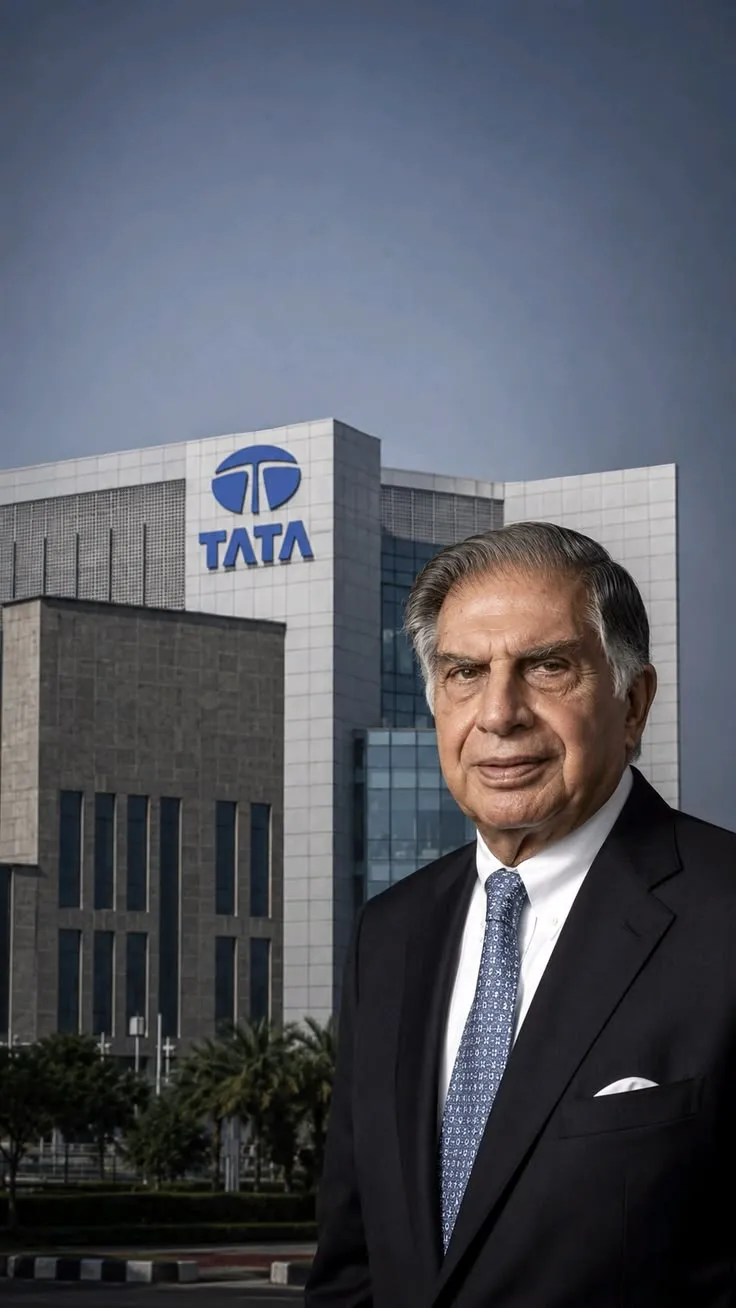
The Tata Group, one of South Asia’s largest and most respected conglomerates, has seen its share of internal tensions over leadership and control. Yet few episodes match the intensity of the power struggle that unfolded in the early 1990s at Bombay House. When Ratan Tata took over as chairman of Tata Sons in 1991, he inherited not a tightly run empire but a sprawling collection of companies dominated by powerful, long-serving barons. What followed was a decisive battle for authority that reshaped the group and is still remembered as one of the defining contests in its history.
An Empire of Autonomous Barons
Ratan Tata was 54 when he succeeded JRD Tata. The transition appeared orderly on the surface, but the reality inside the group was more complex. Under JRD’s long stewardship, individual Tata companies had enjoyed considerable autonomy. Their chiefs had built strong personal authority, loyal teams and public profiles that sometimes overshadowed the holding company itself.
Three figures stood out among this old guard. Russi Mody, the larger-than-life chairman of Tata Steel (then TISCO), had spent more than five decades with the company and was almost synonymous with it. Darbari Seth was a towering presence at Tata Chemicals and Tata Tea, credited with building significant businesses in those sectors. Ajit Kerkar headed Indian Hotels and the Taj group, transforming it into a major hospitality player. These leaders were not mere executives waiting for instructions from Bombay House. They operated with the confidence of custodians who had shaped their companies over decades.
The Need for Central Authority
India was entering a new economic era. Liberalisation, which began in 1991, demanded faster decision-making, greater coordination and a more unified strategic direction. Ratan Tata believed the group needed stronger central oversight if it was to compete effectively in an opening economy. The existing structure, built around powerful satraps, made group-wide alignment difficult.
Asserting the authority of Tata Sons therefore became essential. The new chairman faced the delicate task of bringing independent-minded leaders under a clearer framework of accountability without destroying the entrepreneurial energy that had built those businesses.
The Retirement Policy as a Turning Point
One of the most effective instruments Ratan Tata introduced was a formal retirement policy in 1992. It set age limits for senior positions—typically 65 for executive directors and managing directors, and 75 for non-executive directors and chairmen. The rule provided a transparent, institutional mechanism to manage leadership transitions.
For the old guard, the policy carried immediate implications. Russi Mody, already well past conventional retirement age by the standards of the new rule, found his position under direct pressure. The policy became a focal point of resistance and a practical tool for change.
The Clash with Russi Mody
The confrontation with Mody was the most public and dramatic. Mody had expected to play a continuing central role and, by some accounts, had even seen himself as a potential successor to JRD. Differences soon surfaced over appointments and the extent of Tata Sons’ oversight.
In one notable episode, Mody moved to elevate his preferred candidates, including his adopted son, without full board clearance from the holding company perspective. The move was reversed, deepening the rift. Relations deteriorated further amid public comments and internal manoeuvring. By 1993, Mody had left Tata Steel. His departure sent a clear signal across the group: even the most powerful baron outside Bombay House could be challenged and removed. The authority of the centre had been decisively asserted.
Darbari Seth and Ajit Kerkar
The process of realignment continued with the other major figures. Darbari Seth, a highly respected industrialist, stepped down from his key leadership roles around 1994. In some accounts he transitioned to an emeritus position, but operational control shifted. Attempts to secure a family succession at Tata Chemicals did not succeed in the longer term.
Ajit Kerkar’s exit from Indian Hotels came later, in the mid-to-late 1990s. Like the others, he had built a strong independent franchise. His removal reinforced the message that no company within the group would remain permanently outside the evolving framework of central coordination.
Why the Struggle Mattered
The battles of the early 1990s were not simply personal contests. They determined whether the Tata Group would continue as a loose federation of powerful fiefdoms or evolve into a more coherent organisation capable of pursuing group-level strategy. Ratan Tata’s success in establishing the primacy of Tata Sons created the platform for the far-reaching changes that followed.
In the years after these confrontations, the group pursued greater synergy, professionalised management structures and an ambitious programme of international expansion. Acquisitions and global growth became possible in part because the centre could set direction and allocate resources more effectively than before.
Style and Substance of Leadership
Observers often noted Ratan Tata’s relatively low-key personal style compared with the more flamboyant presence of some of the satraps. Yet the outcomes showed a determined approach to institutional change. He relied on formal rules, board processes and the residual authority of JRD Tata, who remained a supportive presence for a period after stepping down, rather than on open confrontation alone.
The retirement policy, in particular, allowed transitions to be framed as matters of governance rather than pure power plays. Even so, the resistance was real, and the exits were often accompanied by bitterness and public controversy.
Legacy of the 1990s Battle
Three decades later, the episode continues to serve as a reference point whenever questions of authority, succession and the balance between the holding company and operating entities arise within the Tata Group. It demonstrated that even a conglomerate with deep traditions and powerful personalities could be reshaped by a chairman willing to use institutional tools and absorb short-term conflict for longer-term coherence.
Ratan Tata’s victory over the old guard did not eliminate all future tensions. Complex organisations generate new contests over time. But it established a crucial precedent: the centre could, and would, assert itself when the group’s strategic direction required it. In doing so, it helped transform a collection of strong companies into a more unified force capable of competing on a global stage.
The struggle at Bombay House in the early 1990s remains a defining chapter in the Tata Group’s modern history—one in which a new chairman confronted entrenched power, imposed a different model of leadership, and ultimately prevailed.
Read more – todaybestoffers.info
