
Traditional engineering education often begins with isolated theory. Students spend years studying mechanics, materials, circuits or thermodynamics before they ever confront a complete product. By the time they reach a final-year project, the connection between classroom concepts and real-world complexity can feel tenuous. A growing argument suggests this sequence should be reversed. What if engineering college started with building a car, a satellite or a robot, and theory was introduced only as the practical need for it arose?
The Limits of the Conventional Model
The classic approach treats engineering as a collection of separate subjects. Students master individual skills in sequence and are later expected to integrate them. In a world of rapid technological change and multidisciplinary products, that model creates friction. Graduates frequently need extensive on-the-job training to become productive. Employability data in several countries, including India, has long highlighted a gap between the number of engineering graduates produced and the proportion considered ready for industry roles.
Modern products rarely respect departmental boundaries. Designing an electric vehicle, for example, requires simultaneous attention to mechanical structures, power electronics, software, thermal management, manufacturing processes, safety regulations and user experience. Teaching these elements in isolation delays the moment when students confront the real constraints of cost, reliability, regulation and market needs.
Product-First Learning as an Alternative
Product-first education inverts the traditional pyramid. Instead of beginning with generic streams such as mechanical or electrical engineering, students enrol in a curriculum organised around a specific complex product. A “Car School,” “Satellite School” or “Robotics School” would structure the entire programme around the end-to-end creation of that product.
In a car-focused programme, students would engage from the first year with concept development, subsystem design, integration, manufacturing considerations, testing, regulatory requirements and even elements of business and launch strategy. Foundational subjects such as mechanics, materials science or control systems would still be taught, but they would appear in context—when a design decision demands deeper understanding of stress analysis, material selection or feedback loops. The goal is not to abandon theory but to make its relevance immediate and unavoidable.
This approach aligns with broader moves toward experiential and project-based learning. Regulatory bodies and institutions have already begun emphasising live industry problems and hands-on work. Product-first curricula take that direction further by making the product the organising principle of the entire degree rather than an add-on project.
The Role of AI and Virtual Twins
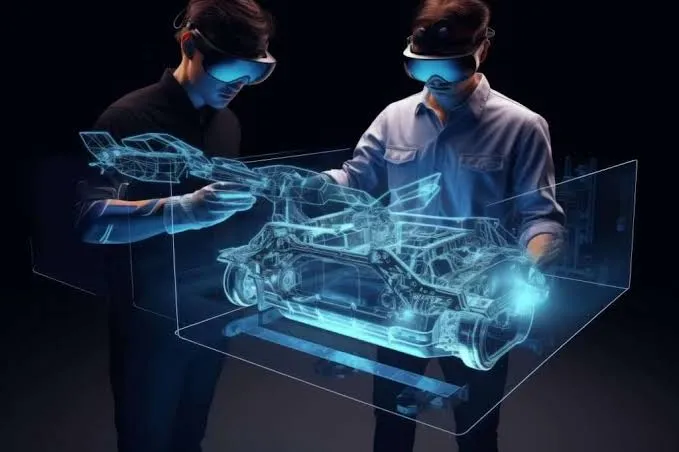
Artificial intelligence and virtual twin technology make such an ambitious model more feasible. A virtual twin is a detailed digital replica of a physical product, system or process. It can incorporate geometry, physics-based simulation, sensor data and operational behaviour. When powered by AI, these twins become dynamic environments in which students can design, test, break and improve complex systems without the full cost and risk of physical prototypes at every step.
In a satellite-focused programme, for example, students could work with a comprehensive virtual twin of an orbital satellite from day one. They would explore structural design, thermal behaviour, power systems, communication links and orbital mechanics inside a simulated environment that responds realistically to their decisions. Failures become learning opportunities rather than expensive setbacks. AI tools can accelerate iteration, suggest design alternatives, optimise parameters and help students understand the consequences of trade-offs.
Similar virtual twins are already being explored for manufacturing education, smart factories and other complex systems. They allow learners to generate and analyse realistic data, practise decision-making under constraints, and experience the full lifecycle of a product in compressed time. When combined with physical prototyping at key stages, the result is a richer, more efficient learning loop.
From Isolated Skills to System Thinking
The deeper shift is pedagogical. Product-first education with AI-supported virtual twins moves students from collecting isolated skills toward practising system-level thinking. They learn to ask better questions: How do changes in one subsystem affect others? What are the cost and performance implications of a particular material choice? How do regulatory and safety requirements shape technical decisions? How does manufacturing feasibility constrain an elegant design?
These questions mirror the realities engineers face in industry. Graduates who have repeatedly navigated them inside a coherent product context arrive better prepared to contribute from an earlier stage. They also develop the habits of iteration, collaboration across disciplines and evidence-based decision-making that innovation requires.
Practical Pathways and Challenges
Implementing this model is not trivial. It demands curriculum redesign, faculty development, industry partnerships and investment in digital infrastructure. Specialised programmes organised around products may require new forms of accreditation and assessment. Not every institution can immediately create a full “Car School,” but elements can be introduced progressively—through major projects, interdisciplinary studios, or partnerships that give students access to industrial virtual twin platforms.
AI tools lower some barriers by making sophisticated simulation and analysis more accessible. At the same time, they raise new educational responsibilities: students must learn to use these tools critically, understand their limitations, and retain fundamental engineering judgement.
Preparing Innovators for an AI-Shaped Profession
AI is already changing how engineers work—automating routine analysis, accelerating design exploration and enabling new forms of optimisation. The implication for education is clear. Future engineers need both strong fundamentals and the ability to operate at the level of complete products and systems. They must be comfortable collaborating with intelligent tools while remaining accountable for outcomes.
Starting with the product rather than the isolated subject offers one coherent response. When students begin by trying to build a car, a satellite or a robot, theory becomes a necessary tool rather than an abstract prerequisite. Virtual twins powered by AI give them a safe, scalable environment in which to practise that building at a high level of complexity. The combination has the potential to narrow the gap between graduation and professional contribution and to produce engineers who think like innovators from the outset.
The traditional sequence of engineering education served an earlier industrial era. In a period defined by rapid technological integration and AI-augmented work, beginning with the end product in mind may prove the more effective route to developing the next generation of capable, creative engineers.
Read more – therecipetaste.com , uuploadarticle.com
