
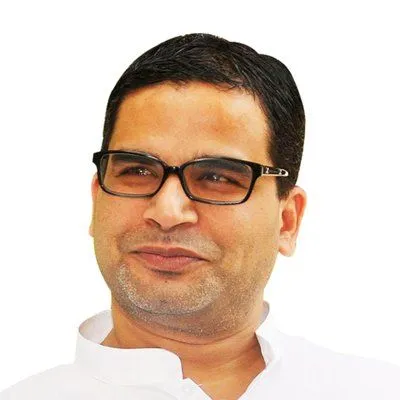
Prashant Kishor, the founder of the Jan Suraaj Party and newly elected MLA from Bankipur, has sharply retaliated against Bihar Chief Minister Samrat Choudhary’s dismissive “bechara” comment. Speaking in Saharsa, Kishor accepted the label in a pointed way while escalating his long-standing criticism of the Chief Minister, calling him an “uneducated criminal” unfit to govern the state.
The exchange has intensified the already heated political rivalry in Bihar and brought renewed focus on questions of leadership quality, governance priorities and personal attacks in the state’s public discourse.
Background of the ‘Bechara’ Remark
The latest confrontation stems from an interview given by Chief Minister Samrat Choudhary. In the conversation, responding to persistent criticism from Kishor, Choudhary remarked that Prashant Kishor is a “bechara” and should be allowed to do whatever he wants. The Chief Minister portrayed himself as focused on governance rather than personal political disputes, stating that he has no personal grudges and prefers to work for Bihar instead of engaging in individual fights.
The comment came against the backdrop of the Bankipur Assembly by-election. That contest was necessitated after BJP national president Nitin Nabin vacated the seat. Kishor contested the bypoll and framed it as a referendum on Choudhary’s leadership. His victory was widely interpreted by him and his supporters as a signal of public discontent with the current dispensation.
Kishor’s Sharp Response in Saharsa
Addressing journalists in Saharsa, Kishor turned the “bechara” jibe on its head. He said Samrat Choudhary was right in calling him “bechara” because he had no other option left but to fight to free Bihar from an “uneducated criminal” like the Chief Minister.
Kishor elaborated on the literal meaning of the word. He noted that a “bechara” is someone left with no alternatives. In his view, the people of Bihar, and he himself, have no choice but to continue the struggle to improve the state. He made it clear that he could not abandon Bihar and leave it in the hands of someone he described in those strong terms.
This is not a new line of attack. Kishor has for a considerable period referred to Choudhary using terms such as “anpadh” (uneducated) and “apradhi” (criminal). These characterisations predated Choudhary’s elevation as Chief Minister by the BJP’s top leadership.
Broader Context of the Political Rivalry
The verbal duel reflects deeper tensions in Bihar politics. Kishor, a former election strategist who built a reputation for helping parties across the spectrum, launched the Jan Suraaj movement with the stated aim of systemic change in Bihar. His entry into electoral politics and the Bankipur win marked a significant moment, especially as it challenged a traditional BJP stronghold in the state capital region.
Kishor has consistently questioned Choudhary’s educational background and past, arguments he has repeated in public forums for months. On the other side, the Chief Minister has sought to rise above personal attacks, emphasising work and governance while dismissing critics as free to approach courts if they have grievances.
The Bankipur bypoll itself became a high-stakes contest. Kishor had argued during the campaign that a win for him would force the attention of national BJP leadership, including the Prime Minister and the Union Home Minister, toward what he described as popular dissatisfaction with Choudhary’s leadership.
Other Issues Raised by Kishor
Beyond the personal exchange, Kishor used the Saharsa interaction to highlight governance concerns. He reiterated his strong opposition to Bihar’s prohibition policy, describing it as “farzi” or fake. He warned that if the law is not repealed, Bihar could face a situation similar to the drug crisis once associated with Punjab, coining the phrase “Udta Bihar.”
Flood management and corruption also featured in his remarks. These issues remain perennial challenges in Bihar, particularly in northern districts like Saharsa that are frequently affected by flooding. By linking them to the leadership question, Kishor sought to broaden the debate from personal barbs to policy failures.
Implications for Bihar Politics
This latest round of rhetoric underscores the confrontational nature of politics in the state. Personal attacks on education, criminal background and fitness to rule have become recurring themes. While such language energises supporters and generates media attention, it also risks polarising public debate and diverting focus from substantive governance outcomes.
For the ruling side, the approach has been to project a focus on development work and to treat opposition criticism as background noise. For Kishor and Jan Suraaj, the strategy appears to centre on sustained questioning of the Chief Minister’s credentials and performance while building an alternative narrative around systemic reform.
The “bechara” episode and the response to it illustrate how language itself becomes a political weapon. By accepting the label and redefining it as a mark of commitment rather than helplessness, Kishor attempted to seize the moral and rhetorical high ground. Calling the Chief Minister an “uneducated criminal,” meanwhile, keeps the pressure on questions of legitimacy and capability that Kishor has raised for a long time.
As Bihar continues to grapple with challenges of development, education, employment and natural disasters, exchanges of this nature will likely keep the political temperature high. Whether they translate into lasting shifts in public opinion or simply add to the cycle of attack and counter-attack remains to be seen. What is clear is that Prashant Kishor shows no intention of softening his critique, and the Chief Minister continues to project an image of being above the fray while focusing on administration.
The episode serves as a reminder of the intensely personal dimension that Bihar politics often assumes, even as larger questions of the state’s future demand attention beyond individual rivalries.
Read more – theantutuscore.com
