
On August 1, 2008, K2 claimed 11 lives in a single catastrophic sequence that remains the deadliest day in the mountain’s recorded history. A coordinated summit push involving climbers from multiple international teams turned into a prolonged fight for survival after fixed ropes in the critical Bottleneck section were destroyed by falling ice. The recent avalanche on nearby Broad Peak that killed celebrated British-Nepali mountaineer Nirmal Purja and nine others has once again drawn attention to the extreme risks of the Karakoram range and the thin margin between success and tragedy at 8,000 metres.
The Setting and the Summit Push
K2, at 8,611 metres, is widely regarded as more technically demanding and statistically more dangerous than Everest. Its steep faces, unpredictable weather and the notorious Bottleneck—a narrow couloir guarded by a hanging serac—have long tested even the most experienced climbers. In the summer of 2008, successive storms had delayed progress for weeks. When a weather window finally opened, roughly 30 climbers from several expeditions left Camp IV, situated near 7,900 metres, in the early hours of August 1 for a summit attempt.
The plan relied heavily on fixed ropes through the Bottleneck and the traverse above it. An advance group was tasked with setting those lines. Delays occurred. Some teams found the ropes insufficient or poorly placed. Traffic jams formed as climbers moved slowly in the thin air. A number of summiteers reached the top late in the day, some as late as early evening, leaving them facing a long descent in fading light.
The Serac Collapse
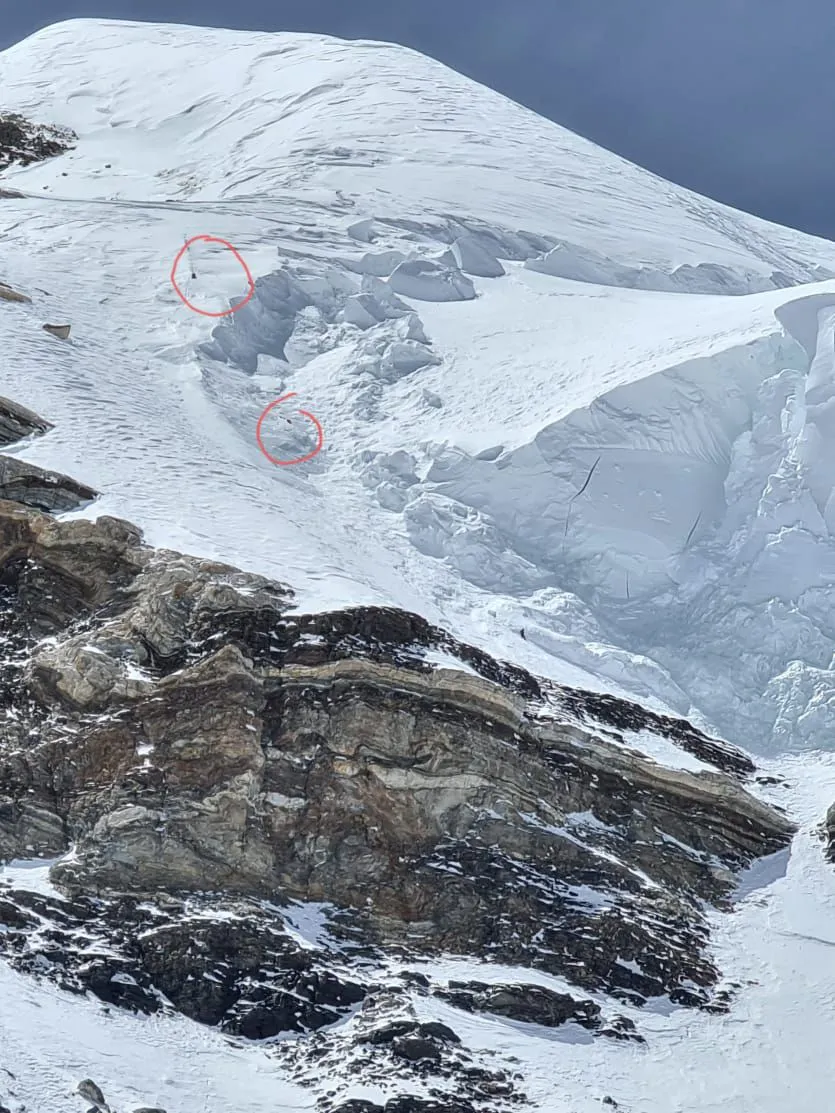
The decisive event came during the descent. A large section of the hanging serac above the Bottleneck broke away. The falling ice and debris swept through the couloir, cutting the fixed ropes that climbers depended on for a secure descent and carrying some climbers with it. Norwegian climber Rolf Bae was among those lost in this initial collapse, disappearing in front of his wife Cecile Skog and teammate Lars Nessa.
With the primary ropes gone, climbers still above the Bottleneck were left with almost no margin for error. Night had fallen or was falling. Temperatures plunged. Many were already exhausted after a long summit day. Supplemental oxygen was limited or exhausted for some. The “death zone” above 8,000 metres offers little opportunity for recovery; prolonged exposure rapidly degrades judgment, strength and the body’s ability to generate heat.
The Struggle to Descend
Those trapped above the Bottleneck faced a brutal choice: attempt to down-climb the steep, icy terrain without fixed protection in the dark, or wait in the open for a rescue that was unlikely to arrive quickly. Some managed to improvise with remaining fragments of rope or by moving carefully on front points and axes. Others fell. Separate incidents claimed additional lives through falls, further icefall, exhaustion and the cumulative effects of cold and hypoxia.
Over the course of roughly 24 to 30 hours, the death toll reached 11. The victims came from South Korea, Nepal, Pakistan, France, Ireland, Serbia and Norway. Some died in the initial serac collapse. Others perished later while trying to navigate the damaged route or while bivouacking without adequate shelter or oxygen. The complexity of the events—multiple separate accidents rather than a single avalanche—made immediate understanding difficult and contributed to the confusion in early reports.
Systemic Pressures on the Mountain
Investigations and survivor accounts later pointed to a combination of factors. The late start and slow progress meant many climbers were still high on the mountain when darkness arrived. Reliance on fixed ropes created vulnerability when those ropes were destroyed. Communication difficulties and the physical limits of high-altitude rescue reduced the chances of timely help. The mountain itself offered no forgiveness: the Bottleneck remains one of the most objectively dangerous passages on any 8,000-metre peak because of the serac that looms above it.
The 2008 disaster was not solely the result of individual error. It illustrated how small delays and shared logistical shortcomings can cascade into catastrophe when the environment turns hostile. Many of the climbers were highly experienced. Luck, timing and the sudden failure of a key section of the route proved decisive.
Echoes in the Present
The Karakoram continues to exact a heavy price. The recent Broad Peak avalanche that killed Nirmal Purja—known for his rapid ascents of all fourteen 8,000-metre peaks—and nine fellow climbers has refreshed public awareness of the range’s dangers. Broad Peak and K2 stand relatively close to each other. Both demand respect for objective hazards that no amount of skill can fully eliminate: seracs, avalanches, storms and the physiological limits of the human body at extreme altitude.
Purja’s death, like the losses of 2008, underscores that even the most accomplished mountaineers operate at the edge of survivability once they enter the death zone. The mountains do not become safer with familiarity; they remain indifferent.
Lessons That Endure
The 2008 K2 tragedy produced detailed examinations of decision-making, rope management, turnaround times and the ethics of crowded summit attempts. Some practices on the mountain evolved. Yet the fundamental equation remains unchanged. At 8,000 metres, a single collapse of ice can sever the thin thread of security that fixed ropes provide. Darkness, cold and oxygen deprivation then turn a difficult descent into a desperate one.
Eighteen years later, the story of that August day still serves as a stark reminder. On K2, the margin between a successful summit and disaster can be measured in hours, metres of rope, and the unpredictable movement of ice. The climbers who left Camp IV on the night of July 31, 2008, sought one of mountaineering’s greatest prizes. Eleven of them never returned. Their fate continues to stand as one of the clearest illustrations of how quickly the high mountains can close the door on even the best-prepared teams.
Read more – laicaicai.com
