
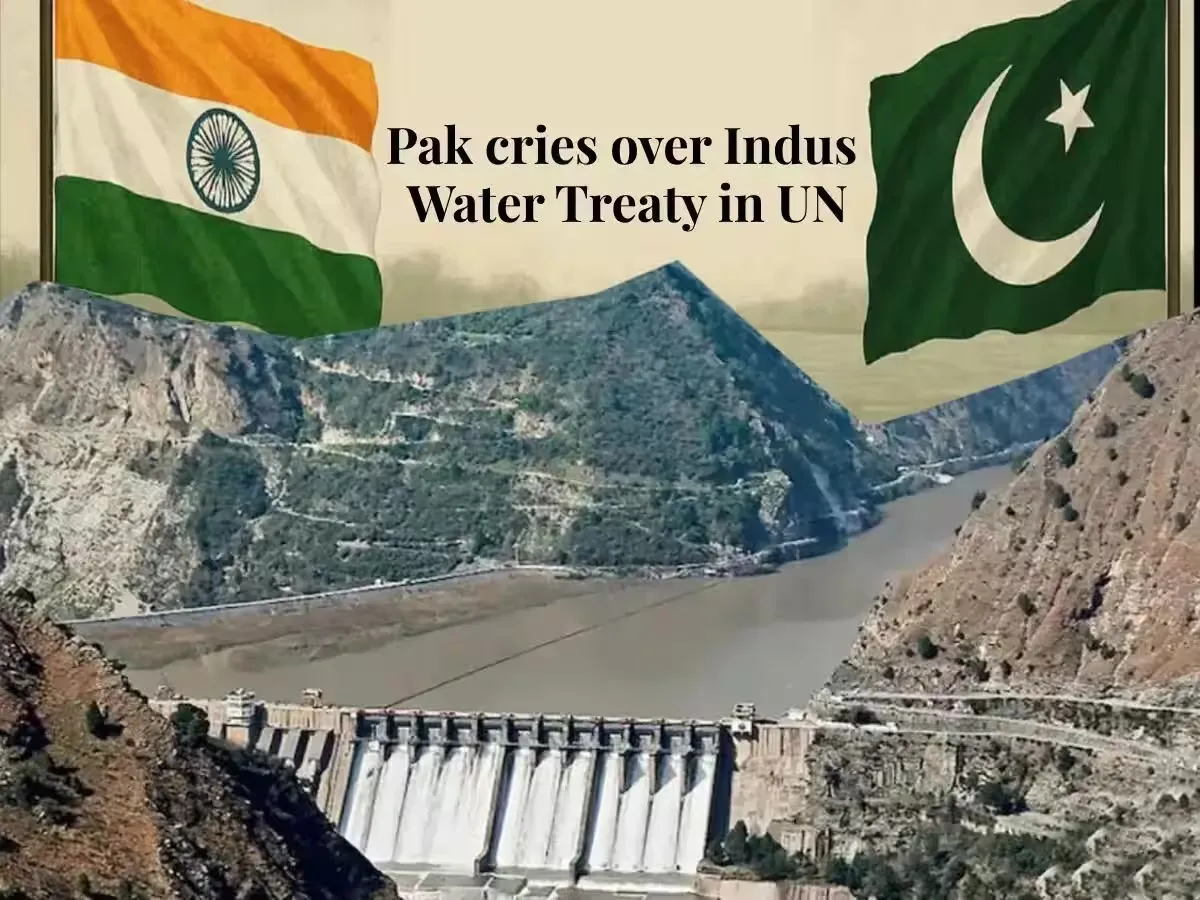
India has strongly rejected Pakistan’s recent communication to the United Nations Security Council concerning a Court of Arbitration pronouncement linked to the Indus Waters Treaty. New Delhi accused Islamabad of misrepresenting facts and spreading falsehoods in an attempt to project an illegally constituted body’s decision as an authoritative ruling.
India’s Official Response
Ministry of External Affairs spokesperson Randhir Jaiswal addressed the matter on Tuesday, responding to questions about Pakistan’s letter to the UN Security Council. He stated that Pakistan has a habit of misrepresenting facts and propagating falsehoods to serve its propaganda objectives.
Jaiswal specifically clarified that the pronouncement in question is not a ruling of the Permanent Court of Arbitration, as Pakistan’s communication sought to portray. Instead, he described it as the product of an illegally constituted court. India, he emphasised, does not recognise this body or any of its pronouncements.
India’s Consistent Position on the Tribunal
New Delhi has maintained a clear and consistent stance on the Court of Arbitration for an extended period. India holds that the body was constituted by the World Bank in violation of the specific terms of the 1960 Indus Waters Treaty. As a result, India has never recognised the legal existence of this tribunal, has refused to participate in its proceedings, and has rejected all its earlier and current pronouncements.
Official statements have stressed that the so-called court possesses no jurisdiction over India’s sovereign decisions, including those related to hydro-electric projects on the western rivers or the overall status of the Treaty. Any findings or awards issued by the body are regarded by India as having no legal effect on its actions.
Background to the Dispute
The latest exchange occurs against the backdrop of India’s decision in April 2025 to place the Indus Waters Treaty in abeyance. That step followed the terror attack in Pahalgam in which 26 people were killed. India linked the suspension of its obligations under the Treaty to the requirement that Pakistan take credible and irreversible steps to end support for cross-border terrorism.
Pakistan has contested India’s decision and pursued proceedings before the arbitration body. The tribunal subsequently issued a pronouncement asserting that the Treaty remains in force and that India’s abeyance decision was not permissible under the pact or international law. India rejected that determination at the time, reiterating that the body itself lacks legitimate foundation under the Treaty.
Broader Context of the Indus Waters Treaty
The Indus Waters Treaty, signed in 1960 with the World Bank as a party, has long governed the sharing of the Indus river system between the two countries. It allocated the three eastern rivers primarily to India and the three western rivers primarily to Pakistan, while permitting limited uses by each side on the rivers allocated to the other.
In recent years the Treaty has become a subject of heightened political contention. India has argued that the agreement, negotiated more than six decades ago, cannot remain insulated from present-day realities, particularly the challenge of cross-border terrorism. Pakistan has characterised India’s actions as violations that threaten its water security and regional stability, and has sought to internationalise the issue through communications to the United Nations.
Diplomatic Implications
By circulating a letter to the UN Security Council, Pakistan has attempted to elevate the arbitration body’s pronouncement onto the multilateral agenda. India’s response seeks to prevent any acceptance of the tribunal’s legitimacy or of Pakistan’s characterisation of the facts. New Delhi’s position is that bilateral treaty mechanisms and the specific dispute-resolution procedures laid down in the Indus Waters Treaty itself must be respected, and that an improperly constituted forum cannot create binding obligations.
The sharp language used by the Ministry of External Affairs reflects the sensitivity of water-related issues in the broader India-Pakistan relationship. Both sides continue to view control over and access to the Indus system as matters of national security and economic survival.
Looking Ahead
India has signalled that its decision to keep the Treaty in abeyance remains in force and that the pronouncements of the disputed arbitration body will have no bearing on its policies or projects. Pakistan is likely to continue diplomatic efforts to draw international attention to its concerns. The fundamental disagreement over the legitimacy of the Court of Arbitration and the current status of the Treaty shows no immediate sign of resolution.
The episode underscores the persistent difficulties in managing a complex water-sharing arrangement amid deep-seated political distrust. For now, India has drawn a firm line against what it regards as a campaign of factual distortion at the United Nations, reaffirming that it will not accept the authority of a body it considers illegally constituted.
Read more – slangpilot.com
