
Travel is one of the most rewarding ways to experience new cultures, landscapes, and traditions. However, tourism also has an environmental impact. Air travel, excessive plastic waste, overuse of natural resources, and irresponsible tourism practices can contribute to pollution, habitat destruction, and climate change. As awareness about environmental conservation continues to grow, more travelers are choosing eco-friendly vacations that minimize their impact on nature while supporting local communities.
An eco-friendly vacation is not about giving up comfort or adventure. Instead, it focuses on making thoughtful choices that reduce environmental harm and promote sustainable tourism. From selecting greener transportation and environmentally responsible accommodations to respecting local cultures and protecting wildlife, every small decision contributes to more responsible travel.
Governments, tourism organizations, and environmental experts encourage sustainable tourism because it helps preserve natural ecosystems, protects cultural heritage, and creates long-term economic opportunities for local communities. Travelers also benefit by enjoying authentic experiences while helping destinations remain beautiful for future generations.
This guide explains how to plan eco-friendly vacations with practical tips that support responsible travel without sacrificing comfort or memorable experiences.
What Is an Eco-Friendly Vacation?
An eco-friendly vacation, also known as sustainable travel or responsible tourism, involves making travel decisions that reduce negative environmental and social impacts. The goal is to protect natural resources, conserve wildlife, support local businesses, and respect the traditions of the destination being visited.
Sustainable travel encourages responsible use of energy, water, transportation, and natural resources while promoting environmentally conscious behavior. Rather than focusing only on sightseeing, eco-friendly tourism emphasizes preserving destinations so they can continue to thrive.
Whether traveling within your own country or internationally, adopting sustainable practices can make every trip more environmentally responsible.
Why Sustainable Travel Matters
Tourism plays an important role in the global economy, but it also affects ecosystems and communities. Popular tourist destinations sometimes experience overcrowding, increased waste, pollution, and pressure on local infrastructure.
Sustainable travel helps reduce these challenges by encouraging responsible tourism practices. Protecting forests, beaches, mountains, wildlife habitats, and cultural sites ensures that future generations can continue to enjoy them.
Responsible tourism also supports local economies by encouraging travelers to spend money with locally owned businesses, artisans, restaurants, and guides instead of relying only on large international companies.
When travelers make environmentally conscious decisions, they contribute to healthier ecosystems and stronger local communities.
Choose Destinations That Promote Sustainable Tourism
The first step in planning an eco-friendly vacation is selecting a destination that values environmental conservation and responsible tourism.
Many destinations actively protect natural landscapes, wildlife reserves, national parks, and cultural heritage through sustainable tourism policies. These locations often encourage responsible visitor behavior while investing in conservation programs.
Researching destinations before traveling helps identify places that prioritize environmental protection, waste management, renewable energy, and community involvement.
Choosing destinations that manage tourism responsibly helps reduce environmental pressure while supporting conservation efforts.
Select Environmentally Responsible Transportation
Transportation is one of the largest contributors to a trip’s environmental footprint. While long-distance travel sometimes requires air transportation, travelers can still make environmentally conscious choices.
Whenever possible, consider trains, buses, or shared transportation, which often produce lower emissions compared to individual vehicle travel. Walking and cycling are excellent options for exploring cities while reducing pollution.
If renting a vehicle is necessary, choosing fuel-efficient or electric vehicles can reduce environmental impact.
Planning routes efficiently and minimizing unnecessary travel also helps lower overall emissions during a vacation.
Stay in Sustainable Accommodations
Accommodation choices significantly influence the environmental impact of a trip. Many hotels, resorts, guesthouses, and eco-lodges now follow sustainable practices designed to reduce energy consumption and waste.
Environmentally responsible accommodations often use renewable energy, water conservation systems, recycling programs, and locally sourced products.
Some properties also participate in environmental certification programs that encourage sustainable operations.
Choosing accommodations committed to responsible tourism supports businesses that invest in environmental protection.
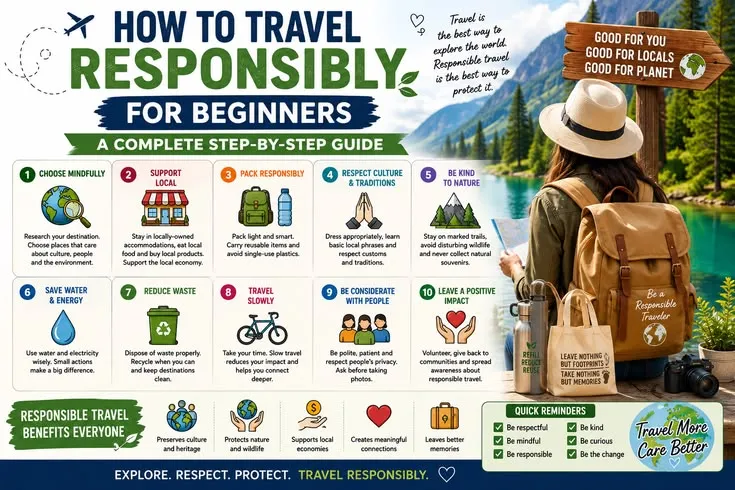
Pack Light and Travel Smart
Packing efficiently benefits both travelers and the environment. Carrying lighter luggage can reduce fuel consumption during transportation, particularly for air travel.
Reusable travel items help reduce waste throughout the trip. Bringing reusable water bottles, shopping bags, food containers, coffee cups, and reusable utensils minimizes reliance on single-use plastics.
Choosing durable travel products instead of disposable alternatives supports long-term sustainability.
Packing only necessary items also makes traveling more convenient and organized.
Reduce Plastic Waste While Traveling
Plastic pollution has become one of the world’s most significant environmental challenges. Tourist destinations, particularly beaches, forests, and parks, often experience increased plastic waste due to visitor activity.
Travelers can reduce plastic waste by carrying reusable bottles, avoiding disposable straws and cutlery, and using refillable toiletry containers.
Purchasing products with minimal packaging also helps reduce unnecessary waste.
Simple habits practiced consistently throughout a trip can significantly reduce environmental impact.
Support Local Businesses and Communities
Responsible tourism benefits local communities by encouraging travelers to support locally owned businesses.
Choosing local restaurants, family-operated accommodations, community guides, craft markets, and regional transportation providers helps generate income for residents.
Buying locally produced goods also encourages traditional craftsmanship and cultural preservation.
Supporting local economies creates more meaningful travel experiences while contributing to sustainable community development.
Respect Wildlife and Natural Habitats
Wildlife tourism should always prioritize animal welfare and environmental conservation.
Observe animals from safe distances without disturbing their natural behavior. Avoid feeding wildlife because human food can negatively affect animal health and alter natural ecosystems.
Choose ethical wildlife experiences that focus on conservation rather than entertainment.
Protecting natural habitats ensures biodiversity remains healthy and allows future visitors to enjoy authentic wildlife experiences.
Conserve Water and Energy
Natural resources such as water and electricity should be used responsibly during travel.
Many tourist destinations experience seasonal water shortages, making conservation especially important.
Simple actions such as taking shorter showers, turning off lights and air conditioning when leaving rooms, and reusing towels can reduce resource consumption.
Responsible use of energy and water supports sustainable tourism while reducing environmental pressure.
Respect Local Culture and Traditions
Eco-friendly travel includes cultural responsibility as well as environmental awareness.
Learning about local customs, traditions, and social expectations helps travelers interact respectfully with host communities.
Wearing appropriate clothing where culturally expected, asking permission before photographing people, and following local guidelines demonstrate respect for local traditions.
Positive cultural interactions strengthen relationships between visitors and local communities.
Minimize Your Environmental Footprint During Activities
Outdoor activities should always be conducted responsibly.
Stay on marked hiking trails to protect vegetation and reduce soil erosion. Dispose of waste properly and avoid leaving litter in natural environments.
Avoid removing natural objects such as shells, plants, rocks, or coral from protected areas.
Following local environmental guidelines helps preserve ecosystems for future visitors.
Offset the Environmental Impact of Travel
Although reducing emissions is the preferred approach, some environmental impacts cannot be completely avoided.
Many travelers choose to support environmental conservation projects that focus on tree planting, habitat restoration, renewable energy, or ecosystem protection.
While carbon offset programs are not a replacement for reducing emissions, they can complement broader sustainability efforts when implemented responsibly.
Combining reduced consumption with conservation support creates a more balanced travel approach.
Benefits of Eco-Friendly Vacations
Eco-friendly vacations offer advantages beyond environmental protection. Travelers often enjoy more authentic cultural experiences, less crowded destinations, healthier outdoor activities, and stronger connections with local communities.
Responsible tourism also helps preserve historical landmarks, national parks, forests, marine ecosystems, and wildlife habitats.
Many sustainable travel experiences encourage slower, more meaningful exploration rather than rushed sightseeing.
As awareness grows, eco-friendly tourism is becoming an increasingly attractive option for travelers seeking memorable and responsible experiences.
Common Mistakes to Avoid
Some travelers unintentionally reduce the effectiveness of sustainable tourism by relying heavily on disposable products, wasting natural resources, disturbing wildlife, or ignoring local customs.
Another common mistake is assuming that sustainable travel is expensive. In reality, many eco-friendly practices, such as walking, using public transportation, supporting local businesses, and reducing waste, can also lower travel costs.
Planning carefully before departure helps travelers avoid unnecessary environmental impacts.
The Future of Sustainable Tourism
Sustainable tourism continues to gain importance as governments, travel companies, and environmental organizations work together to reduce tourism’s environmental impact.
Advancements in renewable energy, sustainable accommodation design, electric transportation, waste reduction technologies, and conservation programs are shaping the future of travel.
Travelers are increasingly choosing destinations and businesses that demonstrate environmental responsibility.
As awareness continues to grow, responsible tourism is expected to become an essential part of the global travel industry.
Conclusion
Planning an eco-friendly vacation is about making thoughtful decisions that protect nature, respect local communities, and preserve cultural heritage. Sustainable travel does not require sacrificing comfort or adventure. Instead, it encourages responsible choices that create positive experiences for both travelers and destinations.
By selecting environmentally responsible transportation, supporting local businesses, reducing waste, conserving natural resources, and respecting wildlife, travelers can significantly reduce their environmental footprint.
Every responsible decision—no matter how small—contributes to protecting the planet. Eco-friendly vacations allow people to explore the world while helping ensure that its natural beauty, biodiversity, and cultural richness remain preserved for generations to come.
