
A video of a barber shaving a customer while wearing a head-mounted camera, body harness and motion-tracking sensors has drawn widespread attention. Shared by industrialist Harsh Goenka, the footage shows the barber performing ordinary grooming tasks as specialised equipment records his hand movements, posture, tool angles and techniques. The clip has fuelled a larger conversation: as artificial intelligence systems learn complex physical skills from human workers, which jobs might eventually feel the impact?
What the Video Shows
In the circulated footage, the barber continues a routine shave or haircut while fitted with a head-mounted camera, a harness connected to wires and sensors, and tracking devices around his wrists. The setup appears designed to capture detailed data on how he holds tools, applies products, adjusts pressure and moves through different techniques. Such recordings can serve as training material for AI models or robotic systems attempting to replicate skilled manual work.
Goenka, chairman of RPG Enterprises, accompanied the post with a pointed observation that AI training is underway in India and that even barbers’ jobs may eventually face risk. The remark was partly light-hearted, yet it touched a genuine nerve. Online discussion quickly moved beyond the novelty of the equipment to deeper questions about automation, data labour and the future of hands-on professions.
From Digital Tasks to Physical Skills
For years, public concern about AI centred on knowledge work—writing, analysis, coding, customer service and other desk-based activities. Physical trades were often assumed to be more resistant because they rely on touch, spatial judgment, real-time adaptation and human interaction. Barbering exemplifies this category: it involves precision near the face, sensitivity to individual features, customer preferences and a degree of interpersonal trust.
The video challenges that assumption by illustrating how motion-capture technology can turn everyday skilled labour into structured data. Once enough high-quality demonstrations are collected, machine-learning systems can study patterns of movement and, in principle, guide robots or automated tools to perform similar actions. Similar data-collection efforts have already appeared in other domains, including factory work and, in some cases, experienced barbers elsewhere participating in projects that map haircutting motions for robotic learning.
This does not mean robotic barbers are imminent. Current systems still face significant hurdles in safety, adaptability, customer comfort and the subtle judgment that experienced practitioners bring. Yet the direction of travel is clear: physical AI is advancing by learning directly from human demonstrators.
The Data-Labour Question
One of the sharpest points raised by the video concerns the role of the worker generating the data. When people perform their normal jobs while wearing sensors, they are effectively producing training material that could later reduce demand for the same skills. Questions arise about compensation, consent, transparency and long-term effects.
Some online reactions focused on whether participants in such projects receive fair payment for the value of the data they create. Others called for clearer regulation or collective frameworks so that workers are not left funding, through their own labour, the systems that may eventually compete with them. These concerns echo broader debates about “data labour” in the AI economy—where human effort trains models whose economic benefits may flow primarily to technology developers.
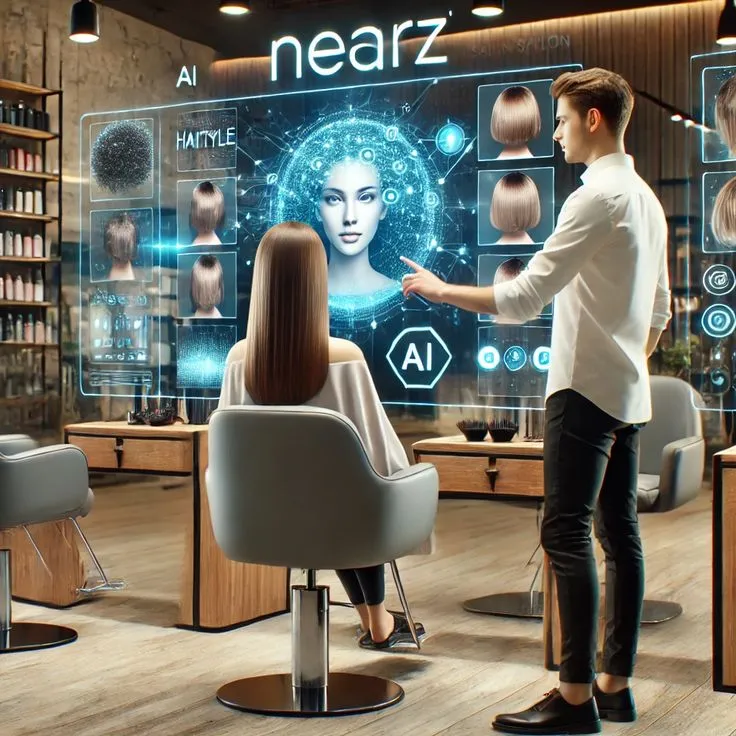
At the same time, some workers view participation as an opportunity to document and preserve craft knowledge, or simply as paid work in the present. The tension between short-term income and longer-term occupational impact remains unresolved.
Trust, Safety and Human Preference
Public reaction also revealed a strong preference for human practitioners in personal services. Many commenters stated they would rather trust a human barber—even one with imperfect technique—than a machine operating near their face and neck. Safety concerns, the risk of software errors, and the loss of personal interaction featured prominently.
Barbering is not only a technical skill; it is a service relationship. Customers often value conversation, familiarity and the sense that another person is paying attention to their appearance and comfort. Fully automated systems would need to address both technical reliability and this relational dimension before widespread acceptance becomes likely.
Broader Implications for Work
The barber example is striking precisely because the occupation feels so far removed from software. If motion data from hair cutting can be captured and potentially used to train machines, similar approaches could apply to other skilled manual roles—cooking, certain forms of care giving, specialised assembly, or maintenance tasks that require dexterity and situational awareness.
Factory automation has a long history, so the extension of AI into industrial settings feels more familiar. Extending the same logic to intimate, client-facing trades makes the technological reach more visible and more personal. It suggests that few categories of work are automatically protected by the need for physical presence or fine motor skill.
This does not equate to immediate mass displacement. Technology adoption is usually gradual, shaped by cost, regulation, customer acceptance and the remaining advantages of human workers. Many roles may evolve into hybrid forms in which AI assists rather than fully replaces people. Nevertheless, the trajectory raises legitimate questions for workers, educators and policymakers about how skills should be developed and how transitions can be managed.
Preparing for a Changing Landscape
The conversation sparked by the video is useful precisely because it moves beyond abstract predictions. It shows a concrete instance of data being gathered from a real workplace for the purpose of teaching machines physical competence. That makes the issue easier to grasp and harder to dismiss.
For individuals, the practical response is not panic but awareness. Understanding how AI systems learn, recognising which aspects of a job are most transferable to machines, and developing complementary skills—judgment, complex communication, creative problem-solving or specialised expertise—remain valuable. For society, the episode underscores the need for transparent practices around data collection, fair compensation for contributors, and thoughtful discussion about the pace and governance of automation.
The barber in the video is simply doing his job while sensors record the details. The larger story is what those details may enable in the years ahead. Whether the eventual outcome is replacement, assistance or something in between will depend on technological progress, economic incentives and collective choices. What the clip makes unmistakable is that the boundary between “safe” human work and work that machines can learn is shifting—and that shift now reaches into the barbershop.
Read more – pokerslive.com
