
Recruiters rarely read every resume in full. Most spend only a few seconds on the initial scan before deciding whether a candidate deserves closer attention. In that brief window, the difference between being shortlisted and being skipped often comes down to how clearly and quickly the document communicates professional value. A great resume is not merely a list of jobs and qualifications. It is a carefully structured argument that answers one central question: why should this person be considered for this role?
The Reality of the Quick Scan
Eye-tracking research and recruiter surveys consistently show that the first few seconds are decisive. Recruiters typically glance at the name, current job title, company, dates, and a few key phrases. If those elements signal relevance, they may continue reading. If the document feels generic, cluttered or hard to parse, they move on.
This reality shapes every effective resume. The goal is not to impress with design or length, but to make the most important information immediately visible and easy to understand.
Start with a Clear Professional Identity
The top of the resume should instantly tell a reader who the candidate is and what kind of role they are targeting. Instead of a vague heading such as “Resume” or a generic objective, strong documents use a specific professional identity.
Examples include “Marketing Executive | Digital Campaigns | Brand Strategy” or “Software Developer | Python | Backend Systems.” This short line functions like a headline. It orients the recruiter and signals that the rest of the document will be relevant to a particular type of work.
A brief professional summary can reinforce this identity. The most effective summaries are concise, targeted and free of fluff. They name the candidate’s core expertise, years of experience where helpful, and one or two standout strengths or results. Generic statements about being a “hard-working professional seeking growth” add little value. Specific language that mirrors the language of the target role performs better.
Experience That Shows Impact, Not Just Duties
The work experience section remains the heart of most resumes. Recruiters want to see what a candidate actually achieved, not merely what they were responsible for.
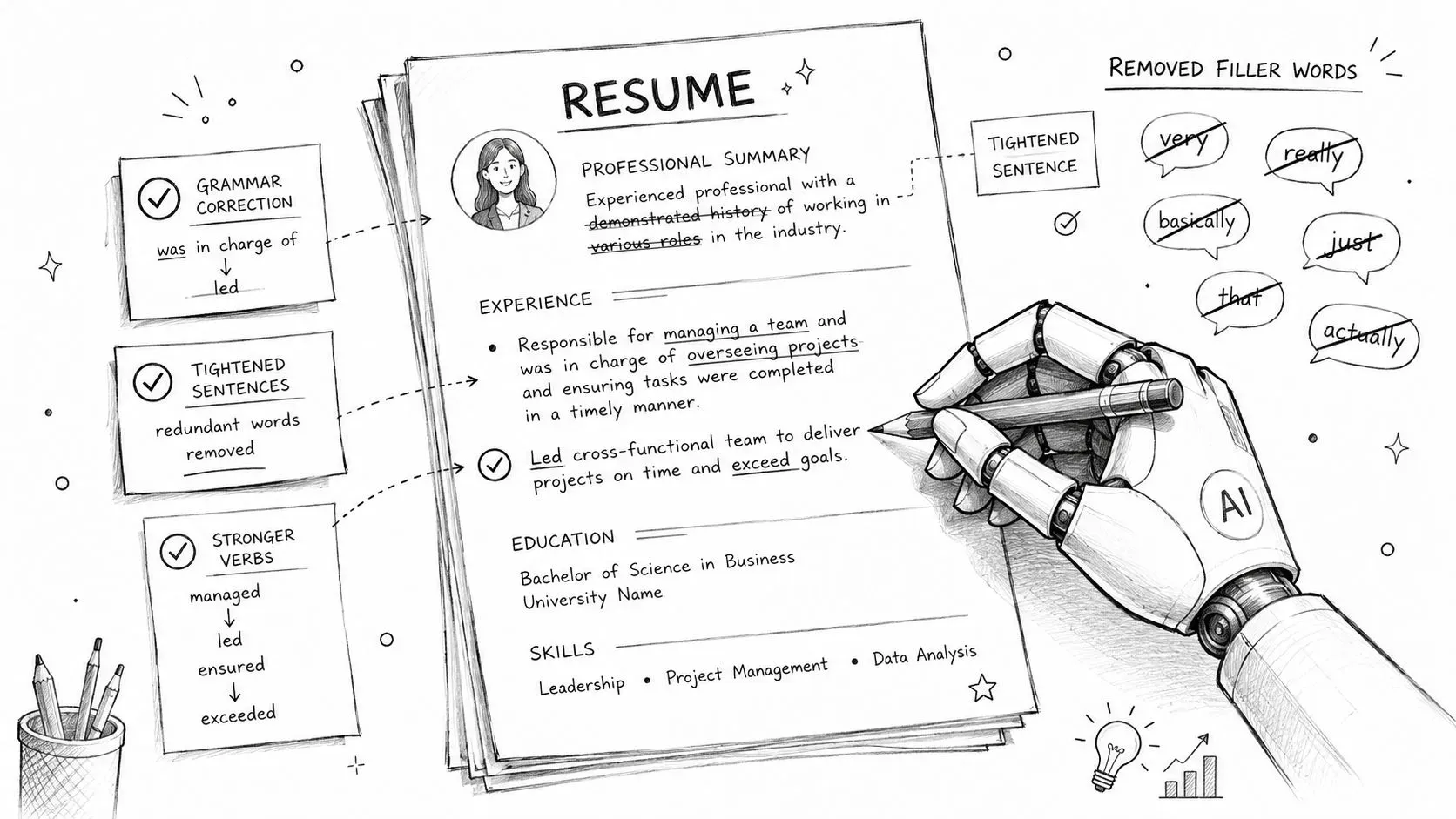
Weak bullet points describe tasks: “Responsible for managing social media accounts” or “Worked on sales.” Stronger ones demonstrate outcomes: “Managed social media content across three platforms and developed weekly campaigns that improved audience engagement” or “Generated leads, followed up with prospective customers and consistently met monthly sales targets.”
The most persuasive bullets follow a simple pattern: action verb, clear description of what was done, and a measurable or observable result whenever possible. Numbers—percentages, revenue figures, time saved, team size, volume handled—help recruiters quickly grasp the scale and significance of the work. Not every achievement can be quantified, but where numbers exist, they should be used.
Reverse-chronological order remains the preferred structure for most candidates because it makes career progression easy to follow. Each role should include the job title, company, location and dates, followed by a focused set of accomplishment-oriented bullets.
Skills That Are Demonstrated, Not Just Listed
A long, undifferentiated list of skills rarely impresses. Recruiters want evidence that the skills have been applied successfully. The strongest resumes integrate skills into the experience bullets and then reinforce them in a dedicated skills section that is tailored to the target role.
For example, rather than simply listing “Data analysis,” a stronger approach pairs the skill with context: “Analysed monthly sales data to identify customer trends and support business decisions.” The skills section can then highlight the most relevant technical and functional competencies, ideally using language that aligns with the job description.
Tailoring matters here. A generic skills list that appears on every application is less effective than one that prioritises the capabilities the specific employer has emphasised.
Clean Structure and ATS Compatibility
Many resumes are first screened by applicant tracking systems before a human ever sees them. Even when a person reviews the document, clarity and scannability remain essential. A clean, single-column, reverse-chronological layout with standard section headings performs best for both machines and people.
Key formatting principles include consistent fonts, adequate white space, clear hierarchy of information, and avoidance of complex tables, graphics or multi-column designs that can confuse parsing software. The document should be easy to skim. Important details should not be buried in dense paragraphs.
Length should be appropriate to experience level. Many effective resumes stay within one or two pages by focusing on relevance rather than attempting to include every past responsibility.
Relevance Is the Decisive Filter
Across surveys and recruiter feedback, one theme appears repeatedly: the resume must feel relevant to the job at hand. Candidates who customise their documents—adjusting the professional identity line, summary, skills emphasis and bullet selection to match the role—consistently perform better than those who send the same version everywhere.
This does not require rewriting the entire resume for every application. It does require thoughtful prioritisation so that the most pertinent experience and achievements appear prominently.
Common Pitfalls That Cause Recruiters to Move On
Several recurring problems cause resumes to be set aside quickly. These include generic language that could apply to almost anyone, duty-focused descriptions without results, poor formatting that makes information hard to find, unexplained gaps or unclear career progression, and obvious lack of tailoring to the role. Typos and inconsistencies also undermine credibility.
In contrast, resumes that survive the initial scan tend to share a few traits: they open with a clear professional signal, they lead with relevant and recent experience, they quantify impact where possible, and they make it easy for a busy reader to extract the key points in seconds.
Building a Resume That Works
A strong resume is the product of deliberate choices. It begins with a precise professional identity, continues with experience framed as achievements rather than tasks, supports claims with evidence, and presents everything in a clean, scannable format. It respects the recruiter’s limited time and answers the fundamental question of fit as quickly as possible.
Job seekers who treat the resume as a strategic communication tool rather than a static historical record give themselves a meaningful advantage. In a competitive market where attention is scarce, the documents that earn a second look are those that make their value unmistakable from the first glance. The anatomy of a great resume is ultimately simple: clarity, relevance, evidence and ease of reading. When those elements are in place, recruiters are far more likely to stop—and keep reading.
Read more – huggymonster.com
